Where are D0 Via D3?
페이지 정보

본문
If 12V (or similar) logic is driving the enter, you'll do just positive if you want to attach the reference to the 5V provide, after which you will not must get the reference from resistors. If you happen to want quite a bit of these, you would possibly do better to use an IC just like the ULN2803 which has eight Darlington drivers in an 18-pin package with integral resistors and protection diodes. In case you have quite a bit of higher-voltage (e.g., 10V, 12V, 15V) circuits it is advisable interface to your pc which has 5V I/O, it is sensible to use increased-voltage shift registers and only convert the three bits that go to and from the 6522's SR, as an alternative of using the 74HC165's and 595's above and changing gobs of bits. The two wires ought to ideally be in the identical precise place in order that any surrounding circuits or noise sources are the same distance away from each wire. Untwisted wires may be an inexpensive resolution in electromagnetic situations where the benefits of twisted cables are not required. Placing the wires shut together, however, isn’t almost as effective as twisting them.
 If one wire has a constructive voltage, the other may have an equal but opposite negative voltage. You should utilize any I/O bits you want, however I selected the ones above for specific reasons.- Bit 0 makes a superb clock bit, because as long as you realize its value, you'll be able to pulse it with solely two instructions, INC DEC to make a constructive pulse, or swap them for a unfavorable pulse, with out affecting the opposite bit values. It requires neither RMW directions, nor AND nor ORA directions, nor altering A, X, or Y. The info sheet (.pdf) has the circuit, ideas for implementation, sample code, and extra, which you can use to construct such a circuit onto your individual board, or you can buy mine. Use of the interrupt pin is optional, but it can be good for those who included it in your laptop in order that for example in the event you make a module for time and date and it has an alarm functionality which makes use of the interrupt, or a keypad controller that interrupts when a key is pressed, you're all set. I've this to the proper of the LCD on my 6"x4.5" workbench laptop, with 6mm tactile keyswitches soldered to DIP headers which might be plugged into DIP sockets; however as I gave it commands from the Pc on the desk opposite the workbench and turn round toward the workbench to see immediate outcomes, there have been occasions that I needed the keys within attain without having to get up every time; so I additionally made a remote keypad and added a pin header on the workbench laptop to connect it with a long cord, like this: (This is in my Tip of the Day column too.) The connections to the two keypads are in parallel, so it all goes to the same I/O bits, and a given key has the same impact no matter which keypad it's pressed on.
As long as you do not go too fast for the bus with its stray capacitance, there aren't any particular timing necessities like RS-232 has, so bit-banging it is very easy. This requires logic-stage translation, hence the LM339; however although it worked for a few years on many various PIC variations I programmed, there was hassle typically with the PIC16F72 and PIC16F74 which turned out to be because the slew price on the clock line coming out of an LM339 section was not fast sufficient. The answer is that the Via looks at the info line at the primary rising Φ2 clock edge after the serial clock goes up; however the '165 additionally goes to the subsequent bit when the serial clock goes up, so the first bit the Via sees is bit 6, not bit 7. For the reason that '165 chain will get forward by one bit, we delay it by one bit with the flip-flop. Handshaking is often completed by the ACKnowledge bit although, and that's on the info line at the end of a byte. Each class of machine has an handle group assigned to some bits within the address byte, and then the device may also have just a few extra pins that you could connect with Vcc or floor to provide more bits within the address byte and allow several devices of the same class to be on the bus at the identical time.
Each transaction is begun with a "start" situation and then the deal with of the goal machine. The other units stand by and don't respond or do something until there's a "stop" condition followed by one other "start" situation and their deal with. The I²C devices are all connected in parallel. If you actually should divide it down, see the discussion board topic at Mixed Voltage Systems: Interfacing 5V and 3.3V Devices. Interfacing to big memory this way is slow, however still much faster than actually calculating the various trigonometric, logarithmic, and other capabilities, and it is correct to all sixteen bits. Within the automated take a look at equipment I designed, constructed, and programmed in approximately 1990, I drove roughly 75 relays by means of Allegro Microsystems UCN5821A (I think it was made by Sprague on the time) 8-bit, serial-in, parallel-out 16-pin shift registers which are rated for 50V, 350mA, made specifically for driving relays and other heavyish hundreds. Again, see Jeff Laughton's circuit tips, way down the web page, for extra prospects. The one negative about it's that being Darlington, the output voltage won't come down to a lot beneath a volt.
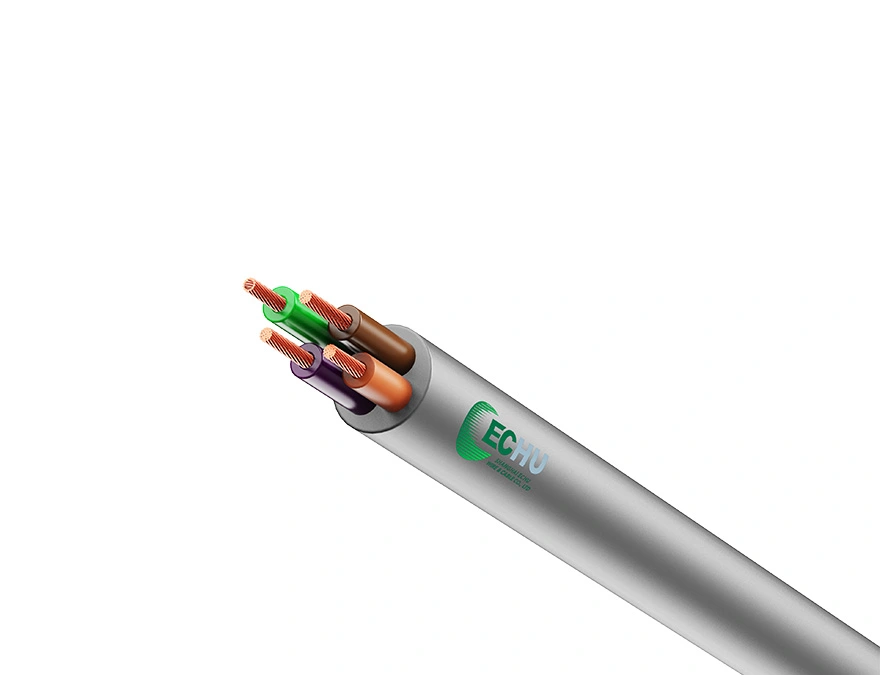
Here's more info in regards to low voltage twisted pair cable look into our web site.
- 이전글비아그라 복용 전 주의사항 한눈에 정리 26.07.15
- 다음글การเลือกเกมใน Co168 ที่เหมาะกับผู้เล่น 26.07.15
댓글목록
등록된 댓글이 없습니다.